

40.7K
Downloads
127
Episodes
In this PodCast, the lovely ladies of Read Watch & Wine will share their opinions of books that have been made into movies. They will explore storylines, adaptations, plot twists, modifications, and of course, the casting. Please keep in mind that many details are discussed, and therefore, spoilers are inevitable.
Episodes
May 19, 2021
May 19, 2021
24 min
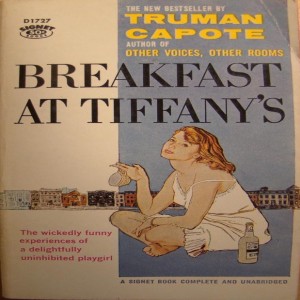
In autumn 1943, the unnamed narrator befriends Holly Golightly. The two are tenants in a brownstone apartment in Manhattan's Upper East Side. Holly (age 18–19) is a country girl turned New York café society, girl. As such, she has no job and lives by socializing with wealthy men, who take her to clubs and restaurants, and give her money and expensive presents; she hopes to marry one of them. According to Capote, Golightly is not a prostitute, but an "American geisha".
Holly likes to shock people with carefully selected tidbits from her personal life or her outspoken viewpoints on various topics. Over the course of a year, she slowly reveals herself to the narrator, who finds himself quite fascinated by her curious lifestyle.

Apr 14, 2021
Apr 14, 2021
27 min
Grace Reinhart Sachs is living the only life she ever wanted for herself. Devoted to her husband, a pediatric oncologist at a major cancer hospital, their young son Henry, and the patients she sees in her therapy practice, her days are full of familiar things: she lives in the very New York apartment in which she was raised, and sends Henry to the school she herself once attended.
Dismayed by how women delude themselves, Grace is also the author of a book You Should Have Known, in which she cautions women to really hear what men are trying to tell them. But weeks before the book is published, a chasm opens in her own life: a violent death, a missing husband, and, in the place of a man Grace thought she knew, only an ongoing chain of terrible revelations. Left behind in the wake of a spreading and very public disaster and horrified by how she has failed to heed her own advice, Grace must dismantle one life and create another for her child and herself.

Mar 17, 2021
Mar 17, 2021
20 min
Andrea Sachs, a recent graduate of Brown University with a degree in English, moves to New York City with her best friend, Lily, a graduate student at Columbia. Andrea hopes to find a career in publishing and blankets the city with her résumé. She believes she'll be closer to her dream of working for The New Yorker if she can get a job in the magazine industry. She gets a surprise interview at the Elias-Clark Group and is hired as a junior assistant for Miranda Priestly, editor-in-chief of the fashion magazine Runway. Although she knows little of the fashion world, everyone tells her that "a million girls would die for [her] job." If she manages to work for Miranda for a year, people tell her, she can have her choice of jobs within the magazine industry.
Mar 10, 2021
Mar 10, 2021
19 min
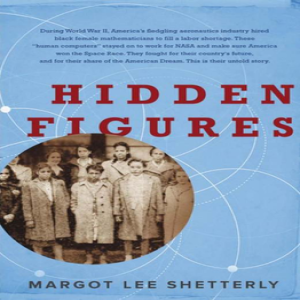
Hidden Figures: The American Dream and the Untold Story of the Black Women Who Helped Win the Space Race is a 2016 nonfiction book written by Margot Lee Shetterly. Shetterly started working on the book in 2010. The book takes place from the 1930s through the 1960s when some viewed women as inferior to men. The biographical text follows the lives of Katherine Johnson, Dorothy Vaughan, and Mary Jackson, three mathematicians who worked as computers (then a job description) at NASA, during the space race. They overcame discrimination there, as women and as African Americans. Also featured is Christine Darden, who was the first African-American woman to be promoted into the Senior Executive Service for her work in researching supersonic flight and sonic booms.
Feb 17, 2021
Feb 17, 2021
29 min
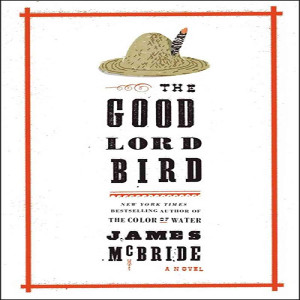
Henry Shackleford is a young slave living in the Kansas Territory in 1857 when the region is a battleground between anti- and pro-slavery forces. When John Brown, the legendary abolitionist, arrives in the area, an argument between Brown and Henry’s master quickly turns violent. Henry is forced to leave town—with Brown, who believes he’s a girl. Over the ensuing months, Henry—whom Brown nicknames Little Onion—conceals his true identity as he struggles to stay alive. Eventually, Little Onion finds himself with Brown at the historic raid on Harpers Ferry in 1859—one of the great catalysts for the Civil War. An absorbing mixture of history and imagination, and told with McBride’s meticulous eye for detail and character, The Good Lord Bird is both a rousing adventure and a moving exploration of identity and survival.
Jan 20, 2021
Jan 20, 2021
24 min
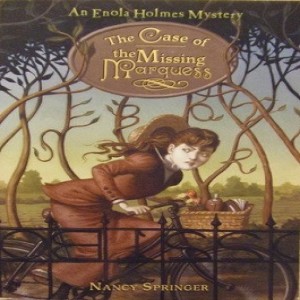
On Enola's fourteenth birthday, her mother disappears, and Sherlock and Mycroft, Enola's brothers, conclude that her mother voluntarily left. Enola is devastated but eventually discovers elaborate ciphers her mother wrote, which leads her to conclude that she left to live with the Romani people and escape Victorian society's confines. Enola finds that her mother left money to fund her escape. When the eldest Mycroft insists that Enola attend boarding school and learn to be a proper lady, she runs away to London instead.
Horrified by her brothers' plans to send her to a boarding school and the prospect of wearing a corset, she escapes. Dressed as a widow, she runs across Inspector Lestrade, who is working on a case with Sherlock about the disappearance of a young Viscount, Lord Tewksbury. Nearly blowing her cover, she finds a secret hiding place that seems to be the young Viscount's hideaway. Concluding that he ran away, she sets off to look for him. Upon arriving in London, Enola discovers the city is not the magical place of her imagination. The same people who have kidnapped the Viscount, who has no street smarts, kidnap Enola. After escaping with the Viscount, she bribes a woman to buy them clothing. Hiding in a police station right under Sherlock's nose, Enola runs away, leaving only a sketch of the suspect on the bench.
She sends a coded message via the personal column to her mother, who responds that she has gone to live with the Romani. The epilogue reveals that Enola has taken on two personas. To the poor, she's the mute "Sister," and to the rich, Ivy, the secretary to a private investigator.
Dec 23, 2020
Dec 23, 2020
35 min
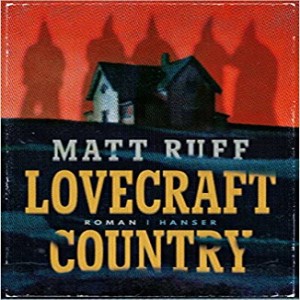
Atticus Turner, working in Florida after leaving the army, returns home to Chicago after receiving a mysterious letter from his estranged father, Montrose, saying he had left Chicago to go to Ardham, Massachusetts, where he believed he could find some information on Atticus' mother's family (previously unknown to them). Atticus, his uncle George, and his childhood friend Letitia drive to Ardham to find Montrose. They are chased, accosted, and later nearly murdered by racists on the way.
Once at Ardham, they find a large manor house called Ardham Lodge. Atticus learns that he is the descendant of the Lodge's founder, Titus Braithwhite. Montrose is being held hostage, chained up in a basement. The current owner of the house, Samuel Braithwhite, is planning a ceremony with all of the members of his lodge (a sect of sorcerers called "The Order of the Ancient Dawn") during which he needs a Braithwhite descendant to be a conduit for some ancient power. Presumably, this will kill Atticus. Caleb Braithwhite (Samuel's only son) is also in attendance, and he secretly instructs Atticus with an incantation to say during the ceremony. Atticus does this, and it causes the unleashed power to consume Samuel and all the members of the lodge and turn them into dust while protecting Atticus. Caleb releases Atticus, George, Montrose, and Letitia and lets them leave to go back to Chicago.
The story broken into distinct storylines with several themes such as Lovecraft Country, Dreams of the Which House, Abdullah's Book, Hippolyta Disturbs the Universe, Jekyll In Hyde Park, The Narrow House, Horace, and the Devil Doll, and The Mark Of Cain.

Dec 2, 2020
Dec 2, 2020
22 min
The hero of The Good Shepherd is Commander Krause, the captain of the fictional US Navy Mahan-class destroyer USS Keeling in World War II. Krause is in overall command of an escort force protecting an Atlantic convoy in the Battle of the Atlantic, shepherding it through the Mid-Atlantic gap where no antisubmarine aircraft are able to defend convoys. He finds himself in a difficult position. The voyage in question occurs early in 1942, shortly after the United States' entry into the war. Although he is a career Navy officer, with many years of seniority, this is Krause's first wartime mission. The captains of the other vessels in the escort group are junior to him in rank, and much younger, but they have been at war for over two years.
The story covers 13 watches (52 hours) aboard the ship's bridge and is told in the third person entirely from Krause's point of view as he fights to save his ship, detailing his mood swings from his intense and focused excitement and awareness during combat to his resulting fatigue, depression, and self-doubt as his self-perceived inferiority and inexperience to the other captains under his command troubles him (although as the story progresses he is shown to be quite capable). He broods over his career and the wife who left him, partly because of his strict devotion to duty. He is troubled when the press of duty forces him to neglect his prayers (unlike most of Forester's other heroes, Krause is devout). He is troubled by recollections that the Navy review board had twice passed him over for promotion, returning a judgment of fitted and retained due to little or no opportunity in the prewar Navy. His promotion to Commander only came when the United States entered the war, leading him to fear that he may be unsuited to his command.

Nov 11, 2020
Nov 11, 2020
25 min
Sarah's Key is a novel by Tatiana de Rosnay, first published in its French translation as Elle s'appelait Sarah in September 2006. Two main parallel plots are followed through the book. The first is that of ten-year-old Sarah Starzynski, a Jewish girl born in Paris, arrested with her parents during the Vel' d'Hiv Roundup. Before they go, she locks her four-year-old brother in a cupboard, thinking the family should be back in a few hours. The second plot follows Julia Jarmond, an American journalist living in Paris, who is asked to write an article in honor of the roundup's 60th anniversary.

Oct 28, 2020
Oct 28, 2020
29 min
Taking place mostly in rural Georgia the story focuses on the life of African-American women in the southern United States in the 1930s, addressing numerous issues including their exceedingly low position in American social culture.
Celie is a poor, uneducated 14-year-old girl living in the South in the early 1900s. She writes letters to God because the man she thought was her father, Alphonso, beats, and rapes her. Alphonso has already impregnated Celie once, a pregnancy that resulted in the birth of a boy named Adam, whom Alphonso also abducts, and Celie thinks he killed him. Celie then has a second child, Celie's ailing mother dies after cursing Celie on her deathbed. The second child was a girl named Olivia, but Alphonso took the baby away shortly after her birth.
Celie and her younger sister, 12-year-old Nettie, learn that a man identified only as Mister wants to marry Nettie. Alphonso refuses to let Nettie marry, instead of arranging for Mister to marry Celie. Mister, a widower needing someone to care for his children and keep his house, eventually accepts the offer. Mister physically, sexually, and verbally abuses Celie, and all his children treat her badly as well.
Shortly thereafter, Nettie runs away from Alphonso and takes refuge at Celie's house, where Mister makes sexual advances toward her. Celie then advises Nettie to seek assistance from a well-dressed black woman that she saw in the general store a while back; the woman has unknowingly adopted Olivia and was the only black woman that Celie had ever seen with money of her own. Nettie is forced to leave after promising to write. Celie, however, never receives any letters and concludes that her sister is dead.